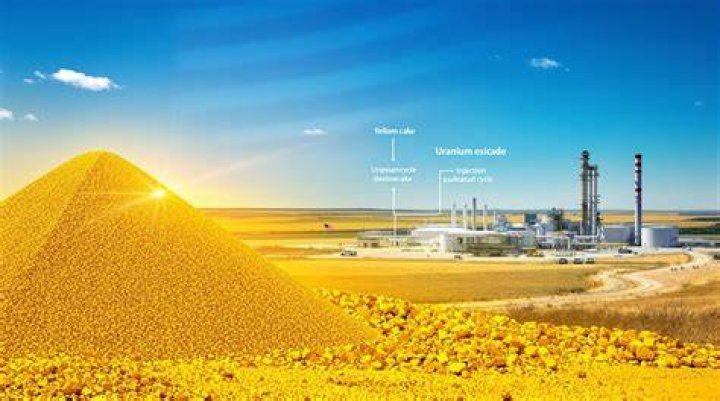
Is yellow cake uranium toxic?
Yellowcake uranium can be highly toxic but does not contain significant radiation, according to the World Nuclear Association. It is transported from mines to conversion plants in drums within normal shipping containers, and the World Nuclear Association said no radiation protection is required to prevent exposure.
What would happen if you ate yellow cake uranium?
Will I die if I eat uranium? Consuming 25 milligrams will immediately wreak havoc on the kidneys. Ingesting more than 50 milligrams can result in kidney failure and even cause death.
How much uranium can you legally own?
By regulation, the general public is allowed to order these materials without possessing a radioactive materials license, so vendors will sell these compounds directly to any customer. However, educational institutions are not allowed to possess more than 3.3 pounds of uranium or thorium at any one time.
How much uranium is in a nuke?
According to the Union of Concerned Scientists, a nuclear bomb needs about 33 pounds (15 kilograms) of enriched uranium to be operational.
How It's Made Uranium Part 1
Can you touch yellow cake uranium?
Is it dangerous? Scientists say it doesn't pose a high risk to human and animal health if stored and handled properly. However, it is a radioactive substance, which means merely standing close to yellowcake without protective clothing can cause organ damage.
Why do they call it yellow cake uranium?
Yellowcake is what remains after drying and filtering. The yellowcake produced by most modern mills is actually brown or black, not yellow, the name comes from the color and texture of the concentrates produced by early mining operations.
Where is yellow cake uranium mined?
Moab, Utah, known as the "Uranium Capital of the World", is also considered a yellowcake boomtown, although its population has sustained due to tourism at the nearby Arches National Park. The boom was initiated in 1952 by Charlie Steen's discovery of uranium and vanadium ore.
How is uranium produced?
Before 1980, most U.S. uranium was produced using open pit and underground mining techniques. Today, most U.S. uranium is produced using a solution mining technique commonly called in-situ-leach (ISL) or in-situ-recovery (ISR).
Where does Russia get its uranium?
Russia. The World Nuclear Association states that Russia has known uranium deposits of 500,000 tonnes and planned to mine 11,000 to 12,000 tonnes per year from deposits in the South Urals, Western Siberia, and Siberia east of Lake Baikal, by 2010.
Which country is rich in uranium?
In 2020, Kazakhstan had uranium reserves amounting to approximately 344 thousand metric tons, making it the country with the largest uranium reserves in the world.
Which is worse plutonium or uranium?
Plutonium-239, the isotope found in the spent MOX fuel, is much more radioactive than the depleted Uranium-238 in the fuel. Plutonium emits alpha radiation, a highly ionizing form of radiation, rather than beta or gamma radiation.
How much uranium is left in the world?
According to the NEA, identified uranium resources total 5.5 million metric tons, and an additional 10.5 million metric tons remain undiscovered—a roughly 230-year supply at today's consumption rate in total.
Can we touch uranium?
With a half-life of 4 billion years, uranium is only very weakly radioactive. In fact, since uranium is a heavy metal, its chemical toxicity is actually more of a danger than its radioactivity. If you touch it directly with your hands, you should wash your hands afterwards. You should not eat it.
What would happen if you ate 1 gram of uranium?
Inhaling large concentrations of uranium can cause lung cancer from the exposure to alpha particles. Uranium is also a toxic chemical, meaning that ingestion of uranium can cause kidney damage from its chemical properties much sooner than its radioactive properties would cause cancers of the bone or liver.
What is the most radioactive thing on earth?
The Most Radioactive Places on Earth
- Uranium: 4.5 billion years.
- Plutonium 239: 24,300 years.
- Plutonium 238: 87.7 years.
- Cesium 137: 30.2 years.
- Strontium-90: 28-years.
What does uranium smell like?
Uranium is a metal that has no smell or taste. Uranium is naturally present in bedrock in many places throughout CT.
How many years until uranium runs out?
The world's present measured resources of uranium (6.1 Mt) in the cost category less than three times present spot prices and used only in conventional reactors, are enough to last for about 90 years. This represents a higher level of assured resources than is normal for most minerals.
How long would it take to run out of uranium?
Uranium abundance: At the current rate of uranium consumption with conventional reactors, the world supply of viable uranium, which is the most common nuclear fuel, will last for 80 years.
Why is uranium so cheap?
Uranium from mining is used almost entirely as fuel for nuclear power plants. Following the 2011 Fukushima nuclear disaster, the global uranium market remains depressed, with the uranium price falling more than 50%, declining share values, and reduced profitability of uranium producers since March 2011.
Why did the Demon Core not explode?
Why didn't the demon core incidents cause the material to explode like a nuke? It needs to be compressed a lot to explode. That's why the Fat Man bomb was a big ball of high explosives surrounding a plutonium core.
Was Fat Man a plutonium bomb?
This implosion-type plutonium bomb, nicknamed Fat Man, weighed 10,800 pounds. The bomb was dropped on Nagasaki, Japan, August 9, 1945, at 11:01 AM. The B-29 Bock's Car (named after Frederick Bock, who was the usual pilot), dropped the bomb from 29,000 feet.
What is the final daughter of uranium?
A nucleus of uranium 238 decays by alpha emission to form a daughter nucleus, thorium 234.
What does Australia do with its uranium?
U-enriched uranium is used to manufacture fuel rods for nuclear power reactors in countries prepared to sign Australian nuclear safeguards agreements.